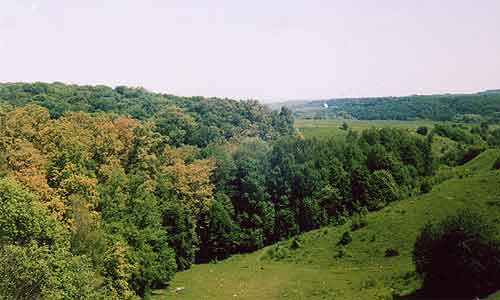
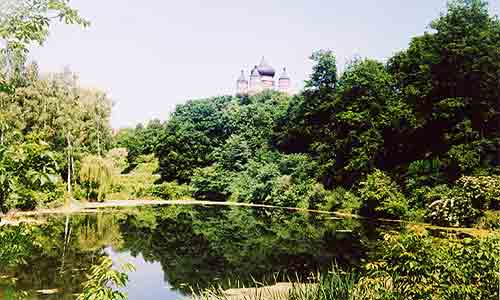
Ecology. Stability of ecosystems.


STABILITY OF TERRESTRIAL ECOSYSTEMS TO PLANT PESTS: AN AXIOMATIC APPROACH.
Gleb I.Vasechko, Cand.Sc. (Biology)
Annatation
It has been developed a generalization of literature data, personal communications of scholars, and own findings that has resulted in a theory describing the phenomenon of stability of terrestrial ecosystems to plant pests - herbivores and phytopathogens. The stability is proceeded by a number of factors suppressing all the diversity plant pest species inhabiting of a given ecosystem. It has been shown stressors, which decrease ecosystem stability. The generalization is based on the Ch.Darwin's regularities of the evolution and the Ch.Darwin's ideas on population dynamics of organisms. It has been proposed practical implications to increase the stability against separate species of plant pests, and recommendations on maintenance of general stability of ecosystems against abiotic and biotic stressors. The text is presented as a list of generalizations - axioms and massif of data for substantiation of these axioms. The used approach has allowed developing a new system of knowledge- Natelogy, which is the first branch of science established in XXI century.

Reflections  ›››
Introduction  ›››
Contents  ›››
The main publications of the author  ›››
Some figures to the book  ›››
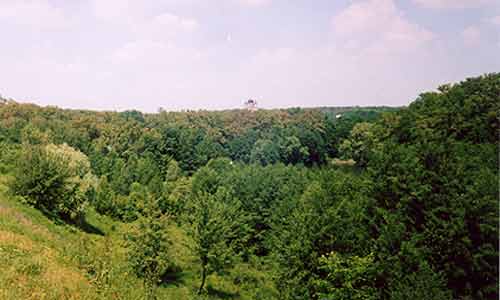
This is an example of the highest level of ecosystem stability to plant pests, and a demonstration of possibility of humans to establish such ecosystems, and keep their general stability over centuries 16 k
Figures 1.
This is an example of the highest level of ecosystem stability to plant pests, and a demonstration of possibility of humans to establish such ecosystems, and keep their general stability over centuries 16 k
Figures 2.
This is an example of the highest level of ecosystem stability to plant pests, and a demonstration of possibility of humans to establish such ecosystems, and keep their general stability over centuries 21 k
Figures 3.
Figures 1, 2 and 3. The beautiful forest with the English oak as a dominant tree species situated near by the capital of Ukraine - Kyiv. The name of this area is Feofania*. This is a rich ecosystem with numerous tree, brush, and grass species within a landscape, which includes diverse ecosystems. In the forest, outbreaks of the gypsy moth and species of other guilds of insect defoliators, with exception of the early-spring guild, have not been recorded. Density of species of the early-spring guild in some years reaches high level, but it does not exert any negative effect on vitality of the dominants. The forest was established by monks several centuries ago on a bare land. Here, some oak trees are approximately 300 years old.
This is an example of the highest level of ecosystem stability to plant pests, as well as a demonstration of possibility of humans to establish such ecosystems, and keep their general stability over centuries.
Now this forest is endangered on the part of statesmen and new riches, which have begun to build in the area their residences. It needs efforts of the World society to protect this natural treasure and monument of proper silvicultural practices. Further, here it is situated the ancient cloister.
In summer, Feofania became extremely pleasant. The area was surrounded by oak trees, and all kinds of fauna and plants flourished there. Beginning XXI century.
The still photograph from Gleb Vasechko still library

STABILITY OF TERRESTRIAL ECOSYSTEMS TO PLANT PESTS: AN AXIOMATIC APPROACH
Gleb Vasechko

2005. A volume of the work - appr. Five Mb, 1489 p., Tables -41, Ref. - appr. 1,000 items, Language - English
Figures 4, 5. In the same window Figures List. In the same window

Copyright © 2001 by the Gleb Vasechko. Use of this materials (in full or in part) without the consent of author is forbidden.
Created 20.03.2005       Contact       Last modification 15.06.2021